
Our Methodology
Our methodology applies rigorous, automated, and scalable evaluation frameworks to clinical AI systems—ensuring algorithms are verified, continuously tested under real-world conditions, and aligned with evolving global regulations.
Recent studies indicate that up to 60% of clinical AI models experience performance degradation when deployed outside their original training environments. Without continuous verification and subgroup analysis, silent failures in algorithmic decision-making pose a significant risk to patient safety. Our approach bridges this gap through continuous, automated stress-testing.
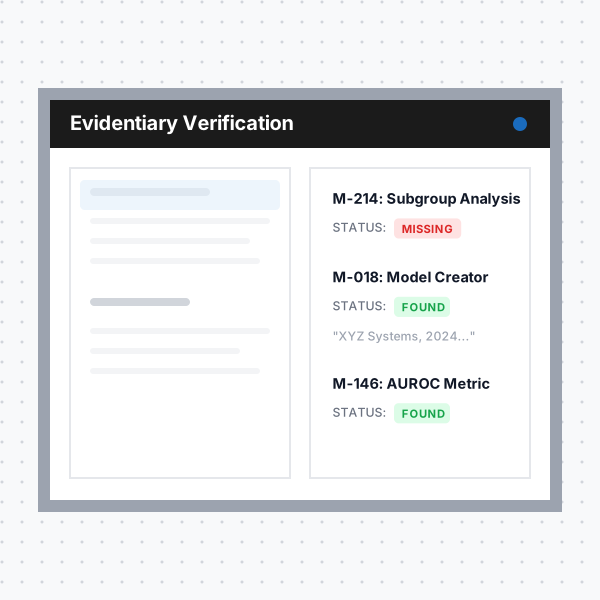
Transparency & Algorithmic Verification
We deploy automated, cutting-edge verification technology to independently audit clinical AI models. This ensures the statistical integrity of training methodologies and provides a transparent, reproducible baseline for every system evaluated.
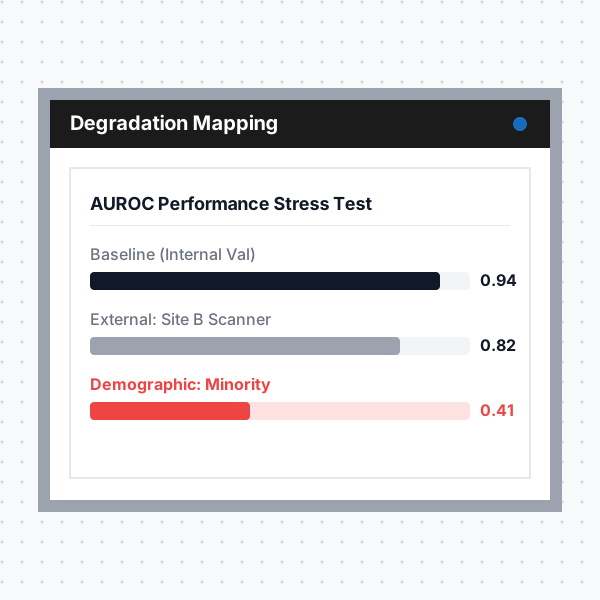
R&D Testing & Execution
We conduct active model execution under diverse constraints. By intentionally introducing noise and updating input sets with cross-national demographic data, we stress-test model outputs. Rigorous subgroup analysis ensures models perform equitably across varied clinical realities.
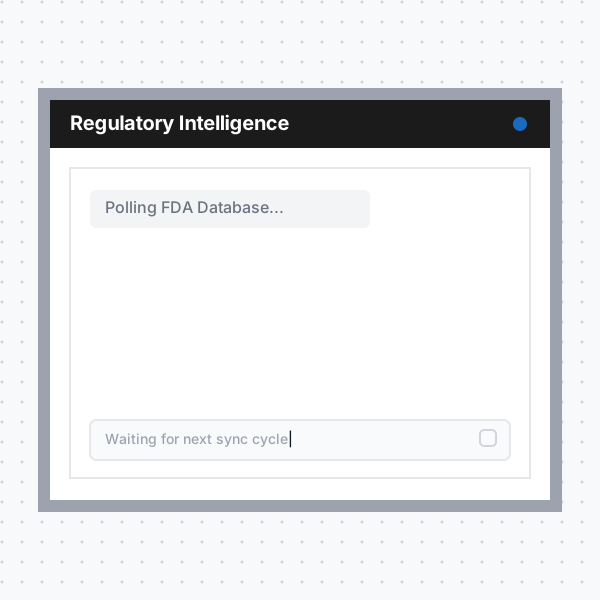
Regulatory Alignment Tracking
Through automated monitoring of global regulatory bodies, we track the latest clinical AI guidelines in real time. This ensures our evaluation frameworks remain continuously aligned with the forefront of international policy and safety standards.
Case Studies & Evidence
Review our in-depth case studies detailing how this methodology is applied to detect biases, verify claims, and align with international standards in real-world clinical deployments.
Read Case Studies →Clinical AI Transparency Registry
We are developing an open Clinical AI Transparency Registry — a structured public record of evaluation findings, methodological gaps identified, and corrective actions taken. The registry is designed to be machine-readable, citable, and updated as tools evolve.